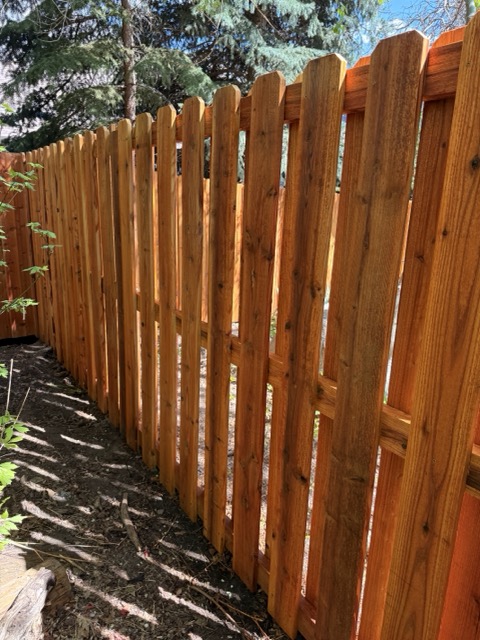
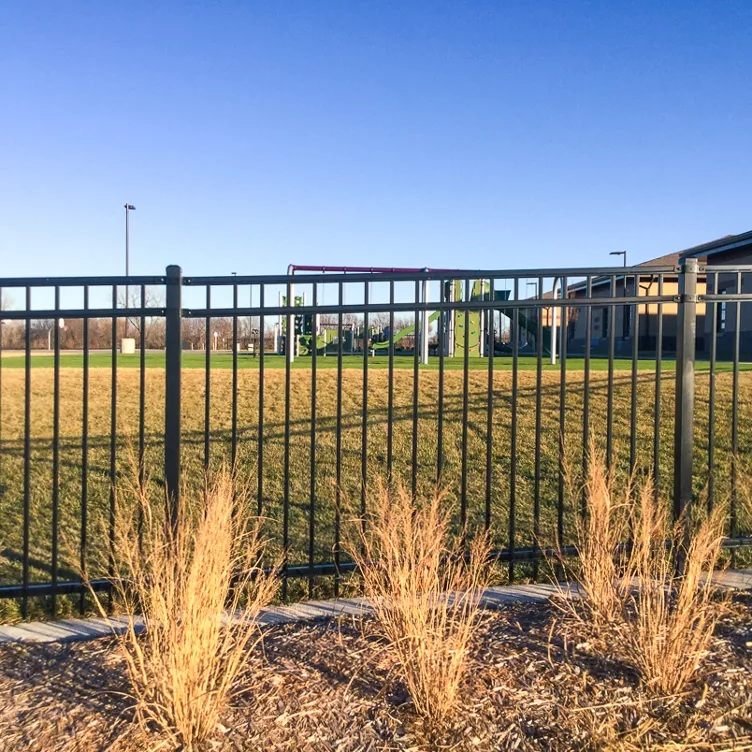
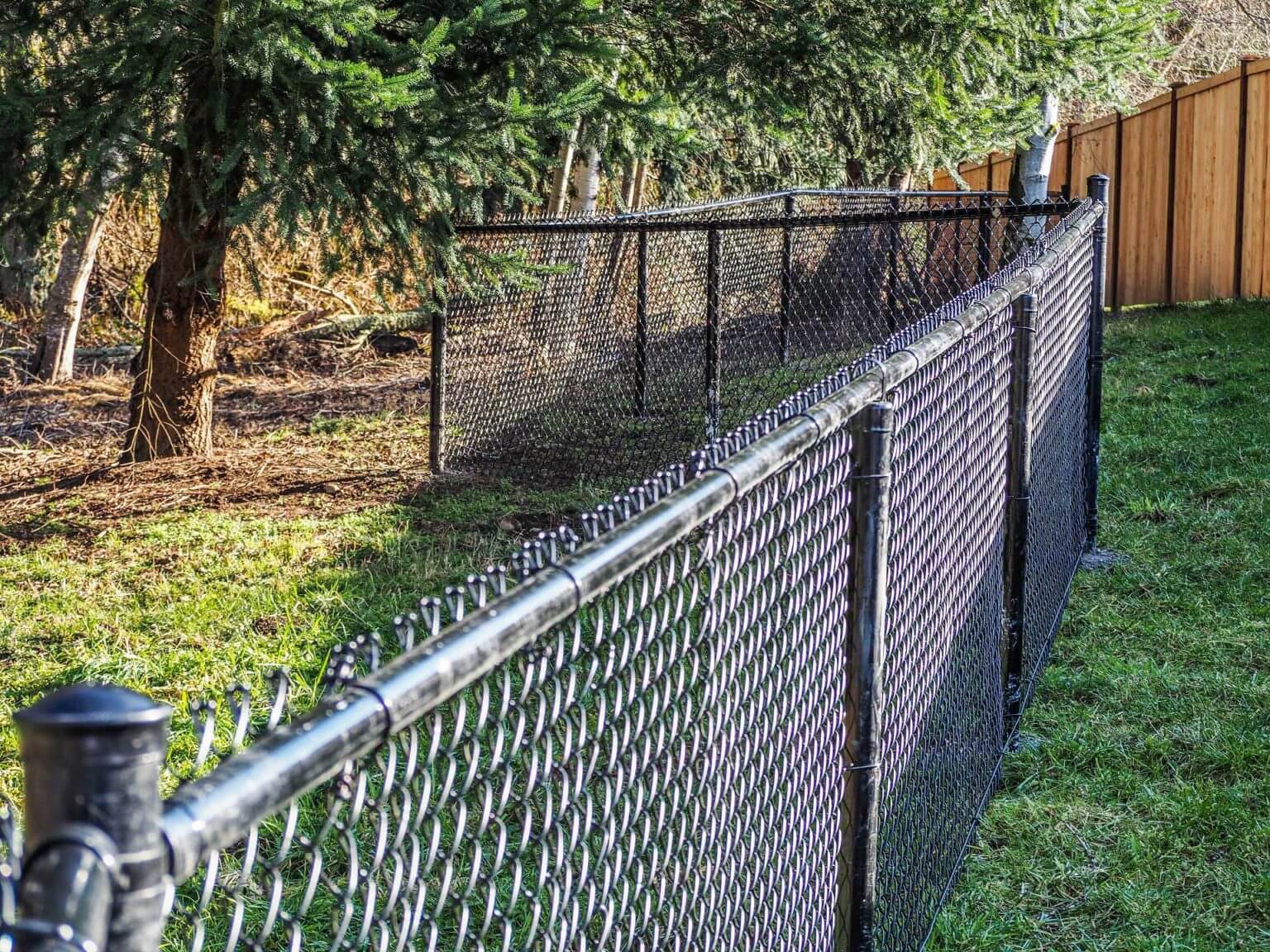
We build cedar wood fences, Ameristar ornamental metal fencing, and chain link — set on Post Masters steel-core posts, cedar posts, or round steel posts depending on the job and the soil. When the schedule allows, we stain the pickets and posts before installation, which means less mess and fewer fumes in a neighbor's yard than staining a fence that's already standing.
Wood fence styles we build
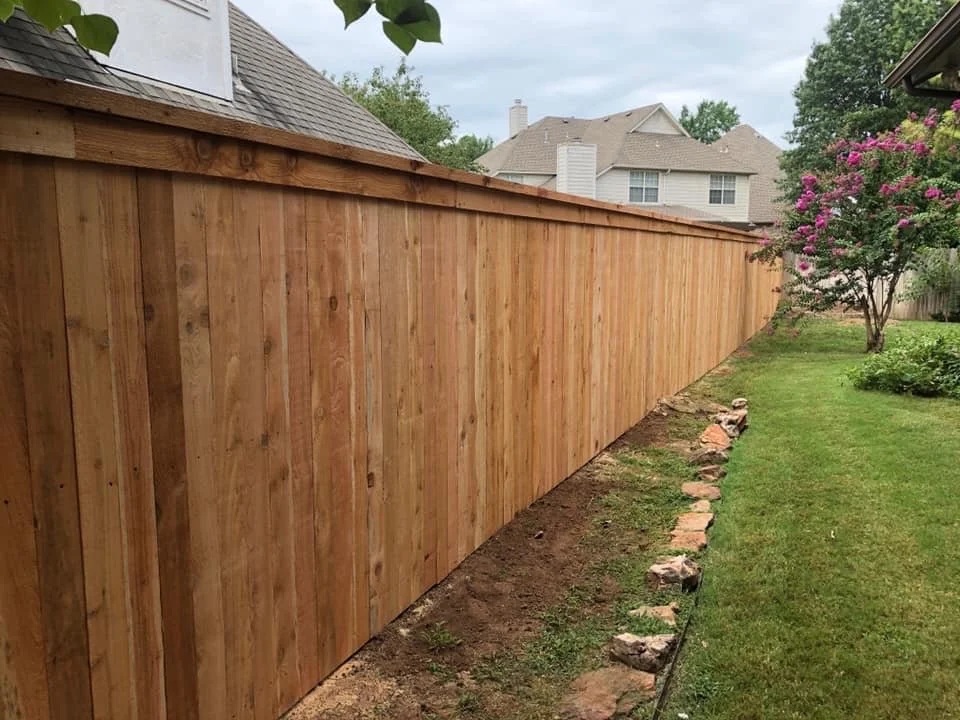
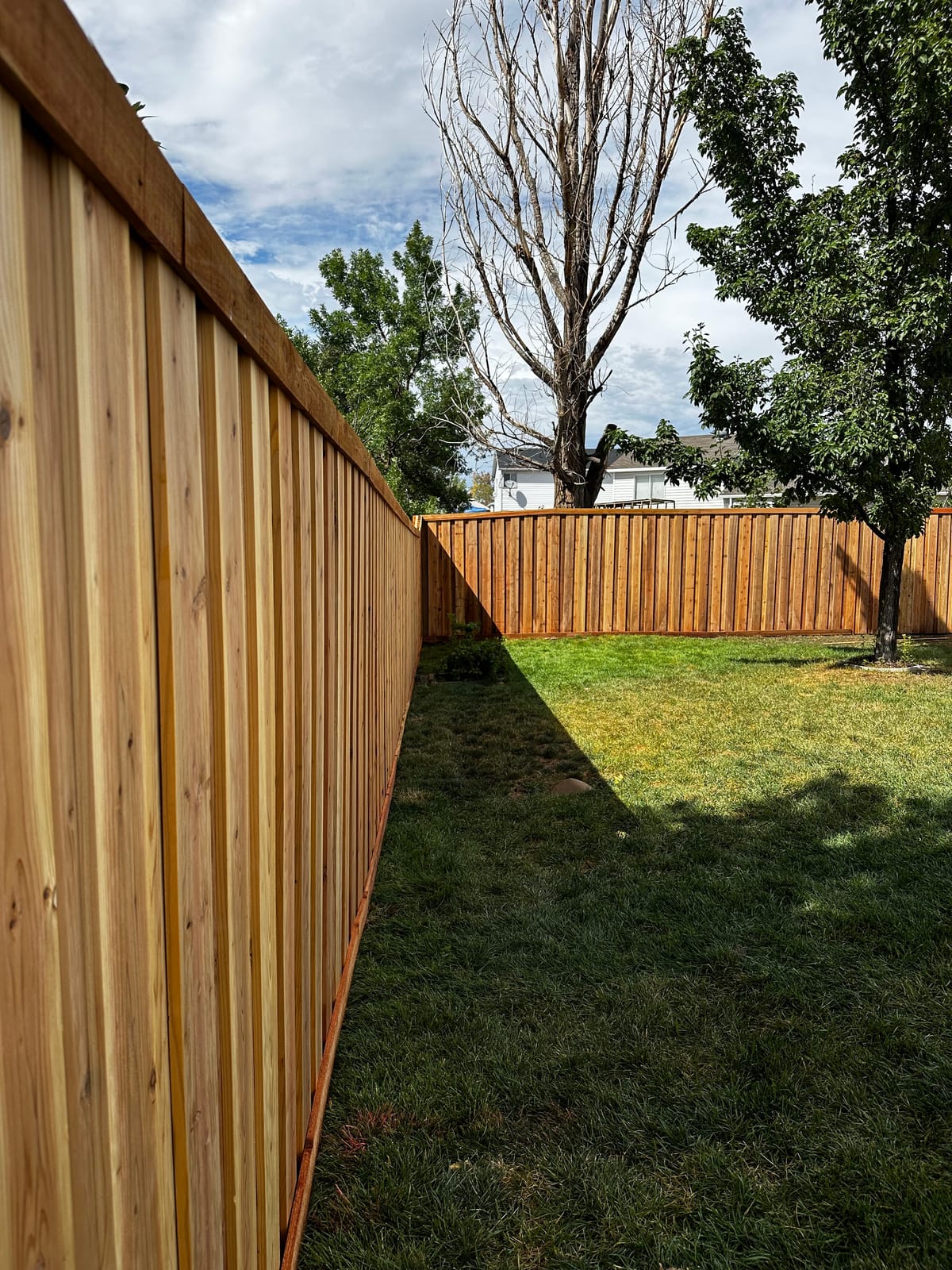
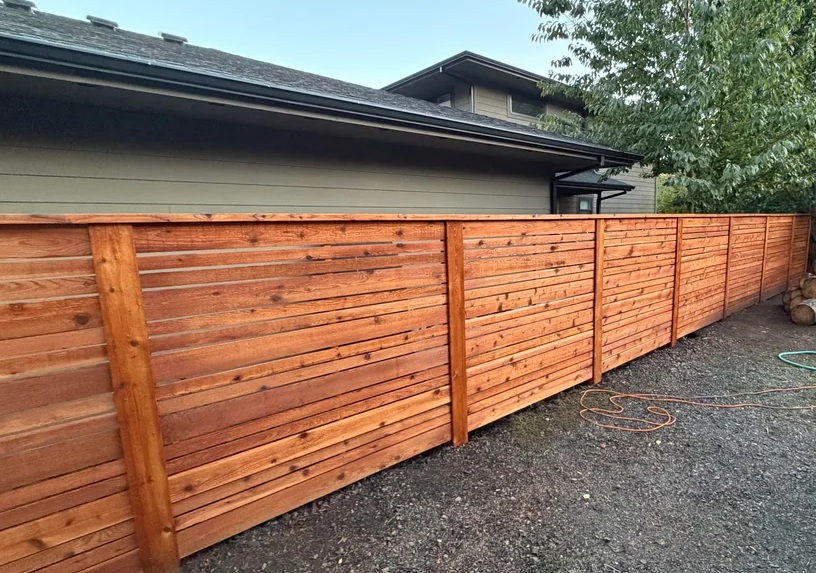
Five styles cover most residential jobs: Privacy, King Plus, Board on Board, Horizontal, and Shadowbox. Each has real tradeoffs in privacy, wind load, and stain time — not just a different look. Photos and the specifics on each are below.
Choosing a wood grade
Cedar comes in a range of grades, and we install across that range to fit different budgets. Lower grades carry more knots and colour variation but cost less and still perform structurally. Clear and select-tight-knot grades cost more, with fewer knots and a more uniform, higher-end appearance. We walk through the grade options and price difference at the estimate — there's no single right answer, it depends on what the fence needs to do and what it's for.
Post Masters, cedar, or round steel posts
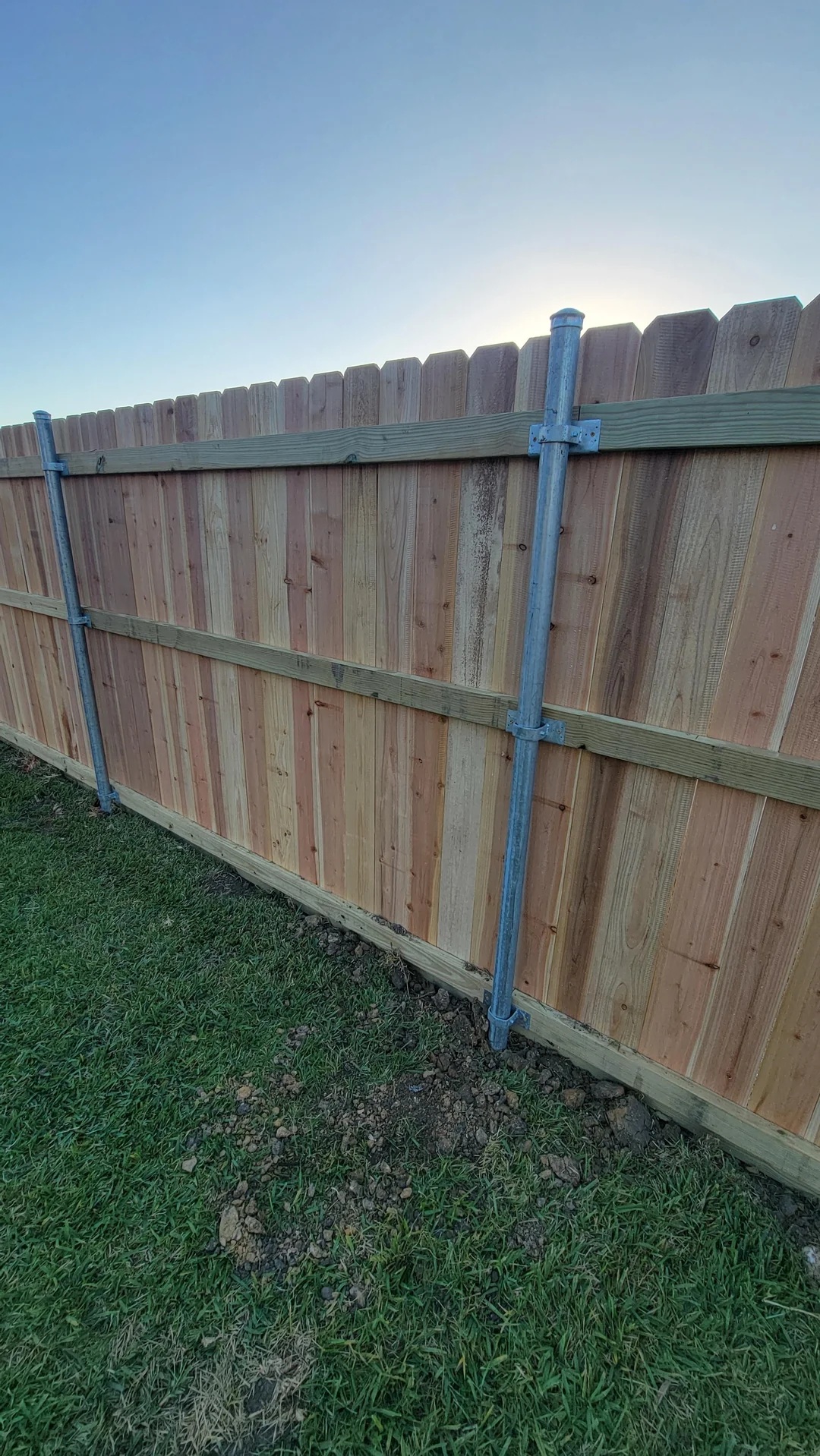
Post Masters are galvanized steel post sleeves set into concrete, with a wood post that slides over the steel and sits above grade on a bracket — the wood never touches the ground or the concrete directly. We can wrap a Post Masters core in a matching cedar picket so the finished fence still looks all-wood from the outside. The upcharge is $30–60 per post, and the steel core carries a 25-year warranty. A standard cedar post set directly in concrete realistically lasts 7–12 years in Front Range clay soils before the base fails — on a long fence run, Post Masters usually pay for themselves over time.
Cedar posts set directly in concrete are the standard option and the lower upfront cost. Round steel posts are what we use for chain link runs and some ornamental metal installations — they don't rot, don't get stained, and aren't meant to look like wood.
Ameristar ornamental metal and chain link
Not every property calls for a wood fence. We install Ameristar aluminum ornamental fencing for pool-code compliance, HOA-restricted street frontage, and low-maintenance perimeters, and chain link for dog runs, utility fencing, and budget-driven jobs. Neither one gets stained — that's the tradeoff against wood: less character, no recurring maintenance.
Why we pre-stain before installation
We prefer an oil-based, semi-transparent stain because it shows the cedar grain instead of hiding it under a solid colour, and because it can go on pickets and posts flat, before they're ever nailed to a rail. Staining laid-out lumber means full coverage on all four sides — including the bottom edges that get missed once a board is already in the ground — with no overspray drifting onto a neighbor's siding and no wet-stain smell hanging over their yard for days. The lumber still has to be at or below 15% moisture content before stain goes on. Pre-staining doesn't skip that step, it just moves it earlier in the schedule, before the crew ever shows up to dig.
Before you book
We build cedar wood fencing, Ameristar ornamental metal, and chain link. We don't install vinyl or masonry walls. If pre-staining matters to you, say so at the estimate — it has to be scheduled before the lumber arrives, not after.