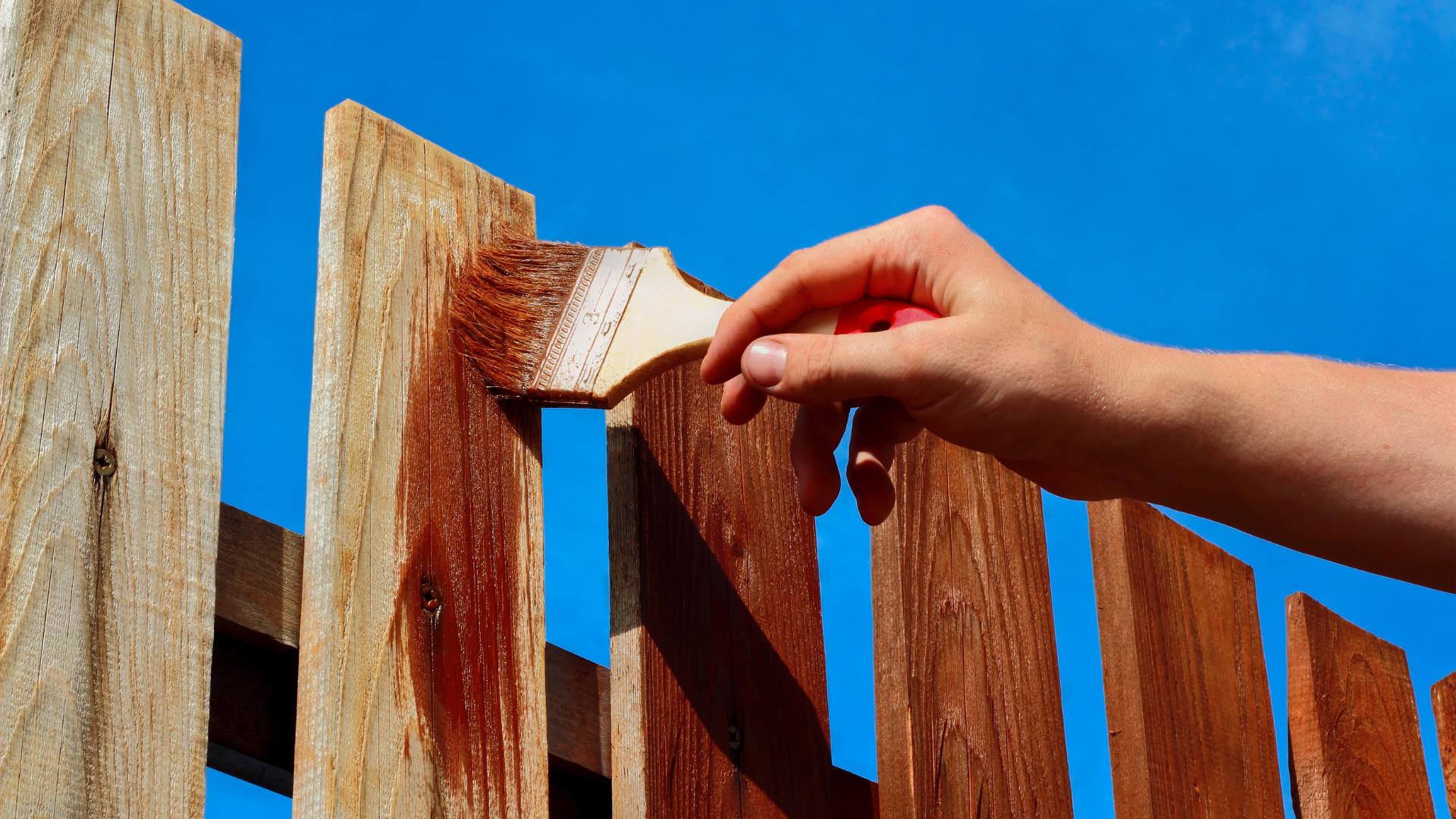
Grey wood tone, water absorption instead of beading, cracking boards, visible mildew, and faded colour. If you see three of these before October, you're better off treating it now than waiting until spring.
The window for staining in Northern Colorado closes fast. Once overnight temperatures drop below 50°F consistently, stain won't cure properly. That typically means September is your last reliable month. If your fence shows any three of the following signs, scheduling now is cheaper than dealing with a winter's worth of damage in spring.
Sign 1 — The wood has gone grey
Grey wood means UV oxidation has stripped the outer layer of the wood fibre. The colour change isn't cosmetic — it signals that the surface is degraded and no longer accepting moisture evenly. Staining grey wood without proper brightening produces an uneven, blotchy finish that wears out faster than it should.
Sign 2 — Water soaks in instead of beading
Splash a cup of water on the fence boards. If it beads up and rolls off, the existing sealer is doing its job. If the water absorbs into the wood within 30 seconds, the protection is gone. That fence is now drinking in moisture from every Colorado rainstorm and afternoon thunderstorm — and holding it through the night.
Sign 3 — Boards are cracking or splitting
Surface cracks form when wood repeatedly absorbs moisture and then dries out. Each cycle stresses the fibre. Small cracks become big cracks once a Colorado winter gets into them — water expands roughly 9% when it freezes, and it does that inside every crack in your fence boards. Treating now won't fix existing cracks, but it will stop them from getting worse.
Sign 4 — Dark spots or mildew growth
Dark staining and fuzzy growth on fence boards means moisture has been sitting long enough for mildew to take hold. Mildew on wood isn't just surface-level — the spores work into the grain. We clean and treat for mildew as part of prep, but if it's extensive, the cleaning step takes longer and the job costs more. Getting ahead of it in September is better than dealing with it in May.
Sign 5 — The colour has faded unevenly
Faded stain on its own isn't urgent — it's normal wear. Uneven fading is the flag. Patchy colour means the previous stain is wearing through in some spots but not others, and those thin spots are exposed wood. Staining a fence that's half-protected and half-exposed is harder than treating one that's uniformly worn. The timing is better, and the result is more even.
What to do if you see three or more of these
Call for an estimate before mid-September. We need dry conditions and above-50°F temperatures for the product to cure. A fence in this condition can typically be cleaned, brightened, and restained in a single visit once we have a dry weather window. Waiting until spring means those cracks spend all winter getting worse.