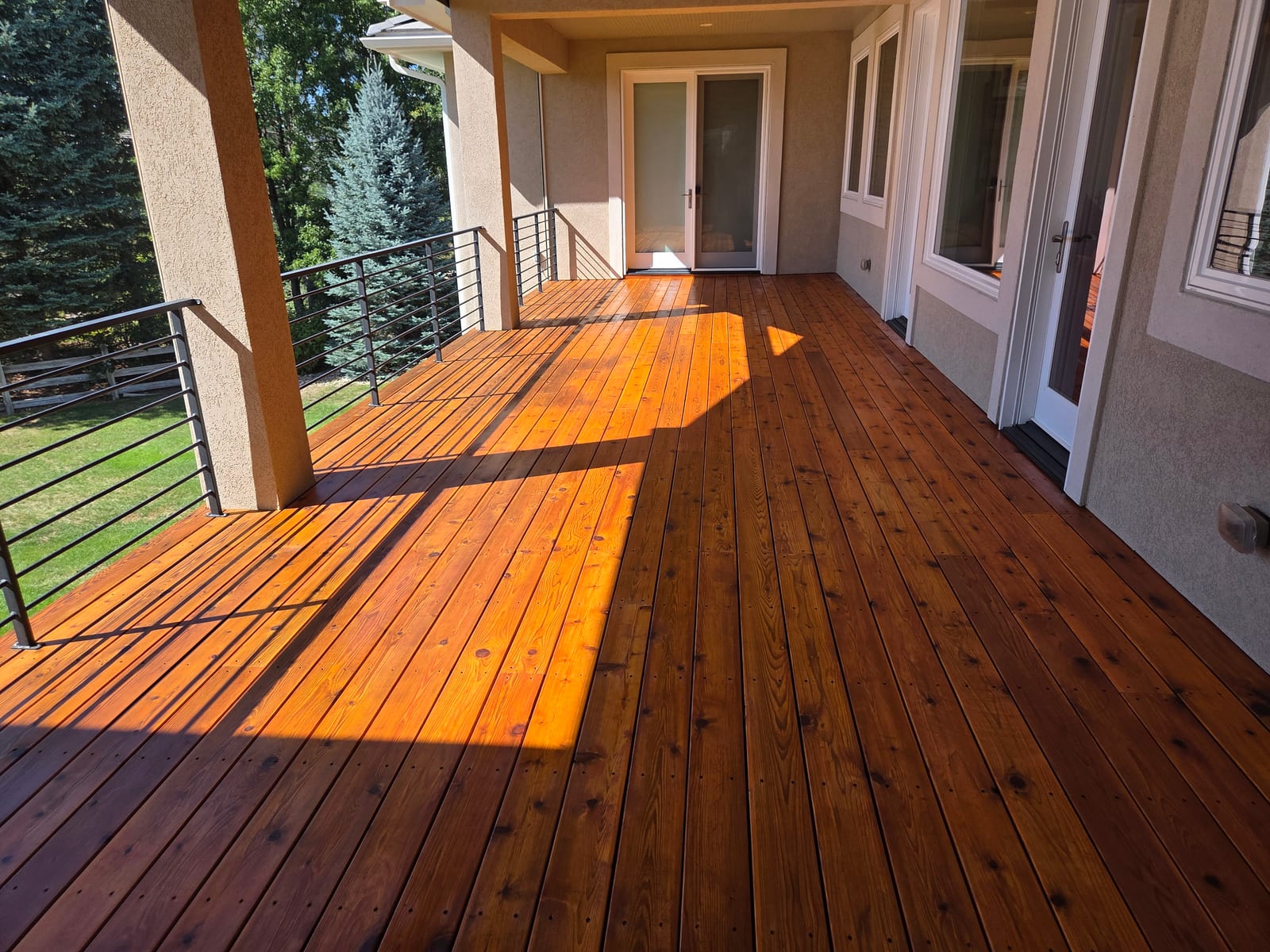
This deck had two stains fighting each other — an old film-forming coating that wore through unevenly, and a penetrating stain that couldn't absorb wherever the film was still intact. The fix wasn't a different product. It was stripping back to bare wood, brightening with an oxalic acid wash, and confirming moisture below 15% before staining. Start to finish, in photos.
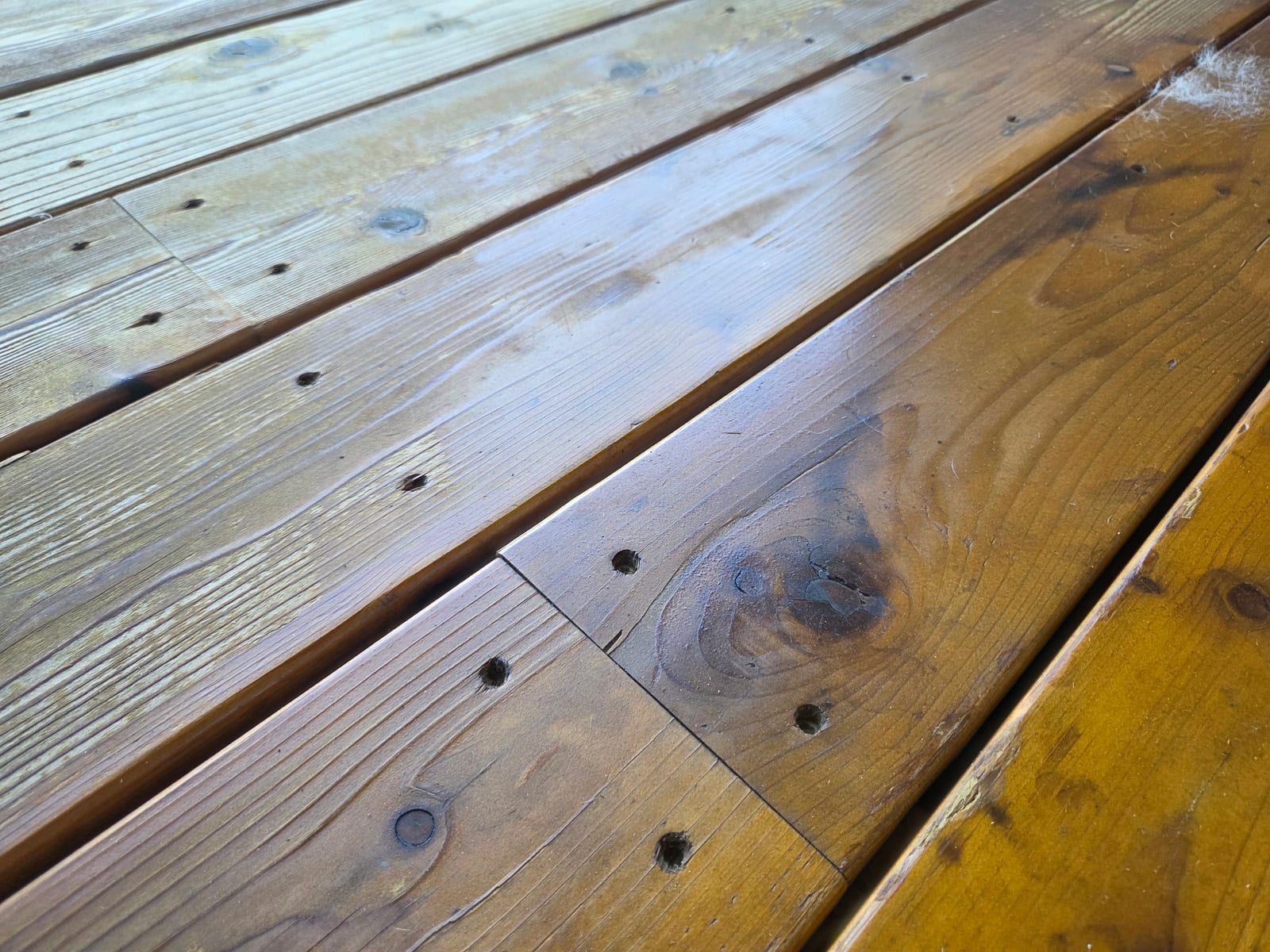
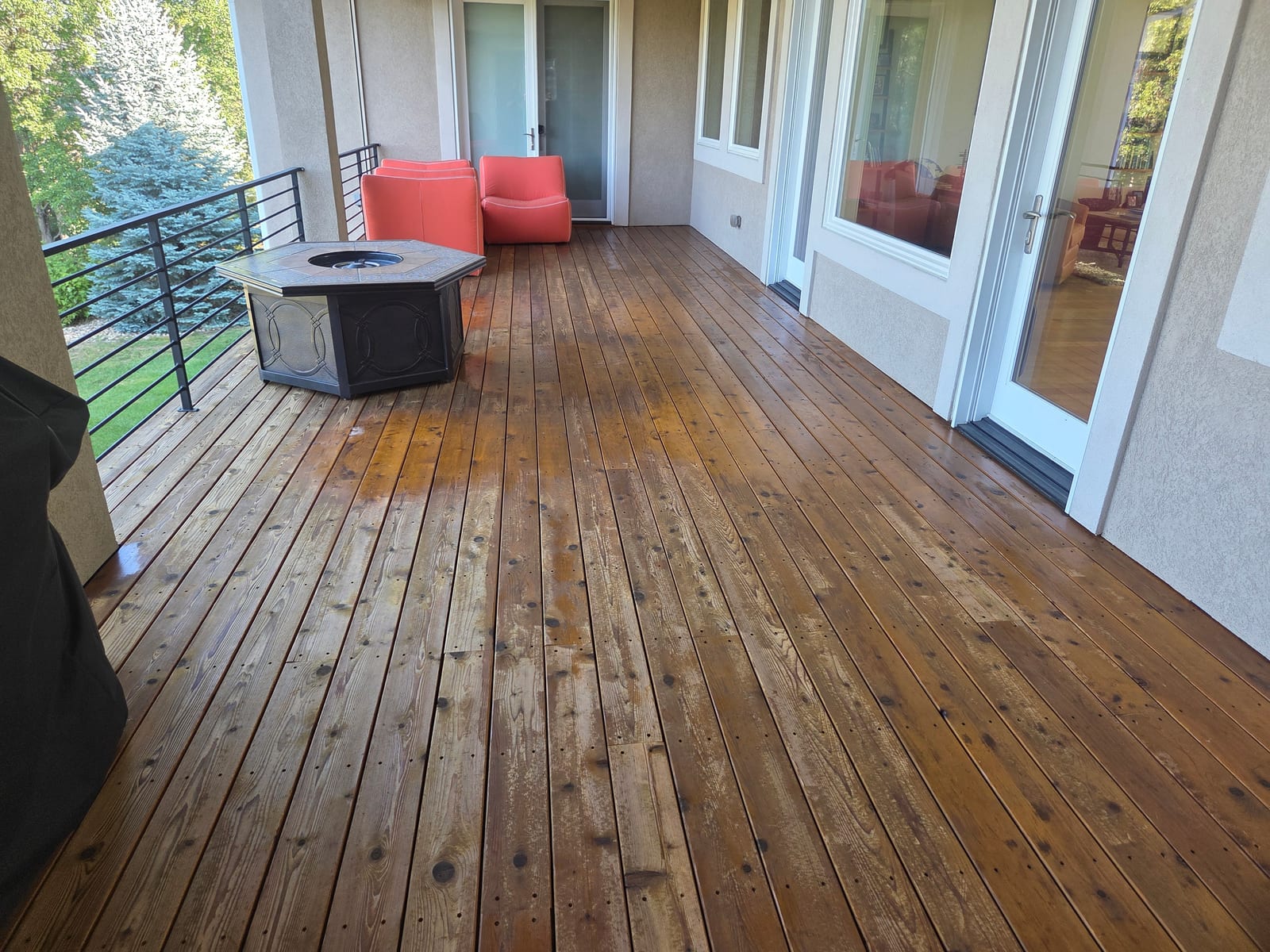
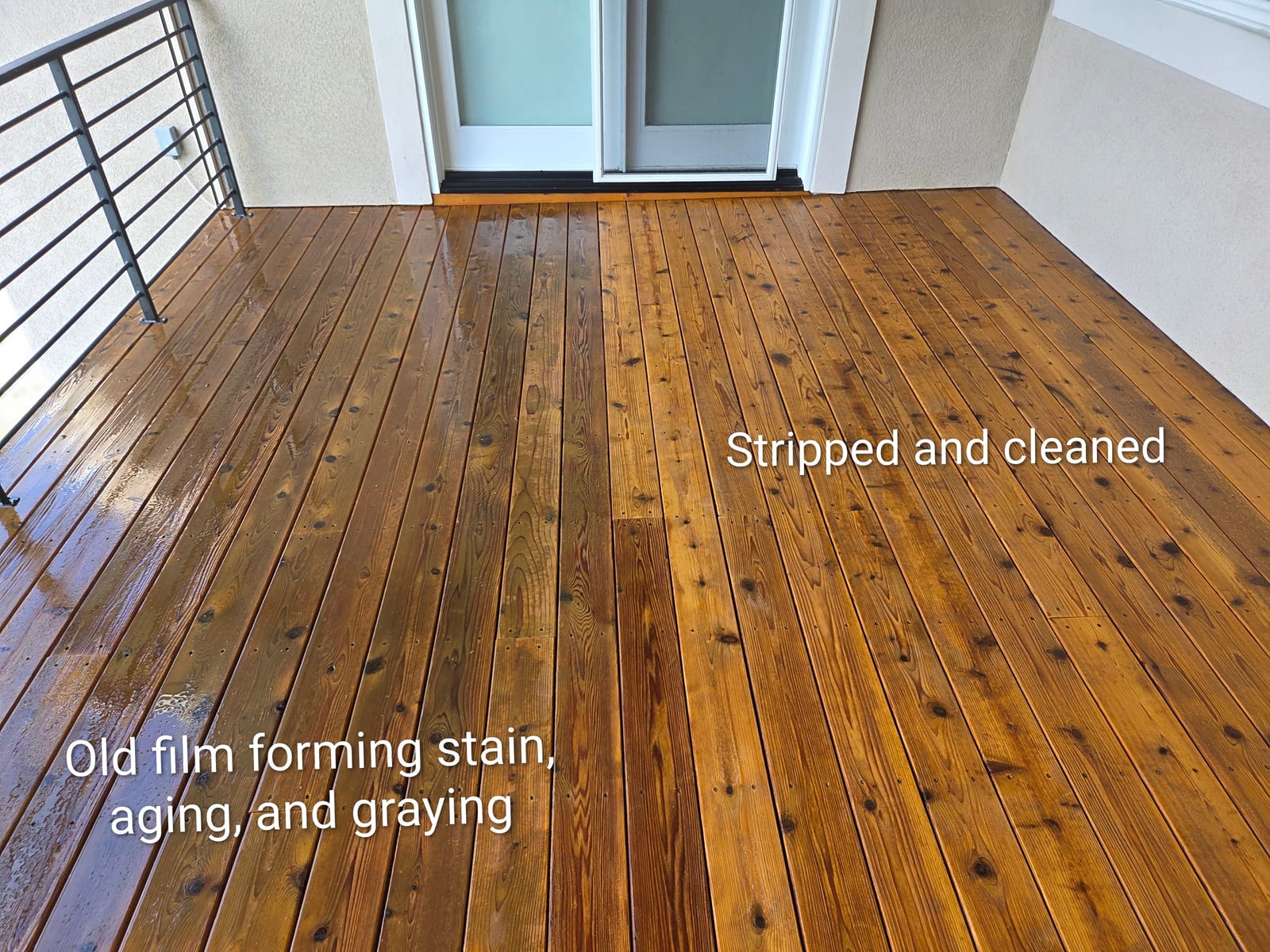
This deck had two stains fighting each other, and pressure washing wasn't going to settle it. Years earlier, someone applied a film-forming oil stain — the kind that sits on top of the wood rather than soaking into it. Sun and weather wore through that coating unevenly: some boards went bare and gray, others still held a sticky film. A painter later tried to refresh the deck with a penetrating stain, and wherever the old film was still intact, the new product had nowhere to absorb. It sat on the surface and turned tacky. Repeated mineral spirits washes didn't touch it.
Why the New Stain Wouldn't Absorb
Film-forming stains and penetrating stains work on opposite principles. A penetrating oil stain soaks into open wood grain and bonds below the surface — it needs bare, open wood to do that. A film-forming product seals the surface instead, the same way paint does. Once that film is down, nothing applied on top of it can penetrate; it just sits there. That's what happened on this deck. The painter didn't do anything wrong with the application — the wood underneath simply wasn't ready to accept a penetrating product.
Film-forming coatings fail on horizontal deck surfaces within 1–2 years in Colorado's climate — they trap moisture, blister, and peel. Penetrating oil-based stain lasts 2–4 years on the same surface, and it fails gracefully: it fades instead of peeling. That gap is why we don't recommend film-forming products for deck boards, and it's why this deck needed to come back to bare wood before anything new could go down.
The Fix, Step by Step
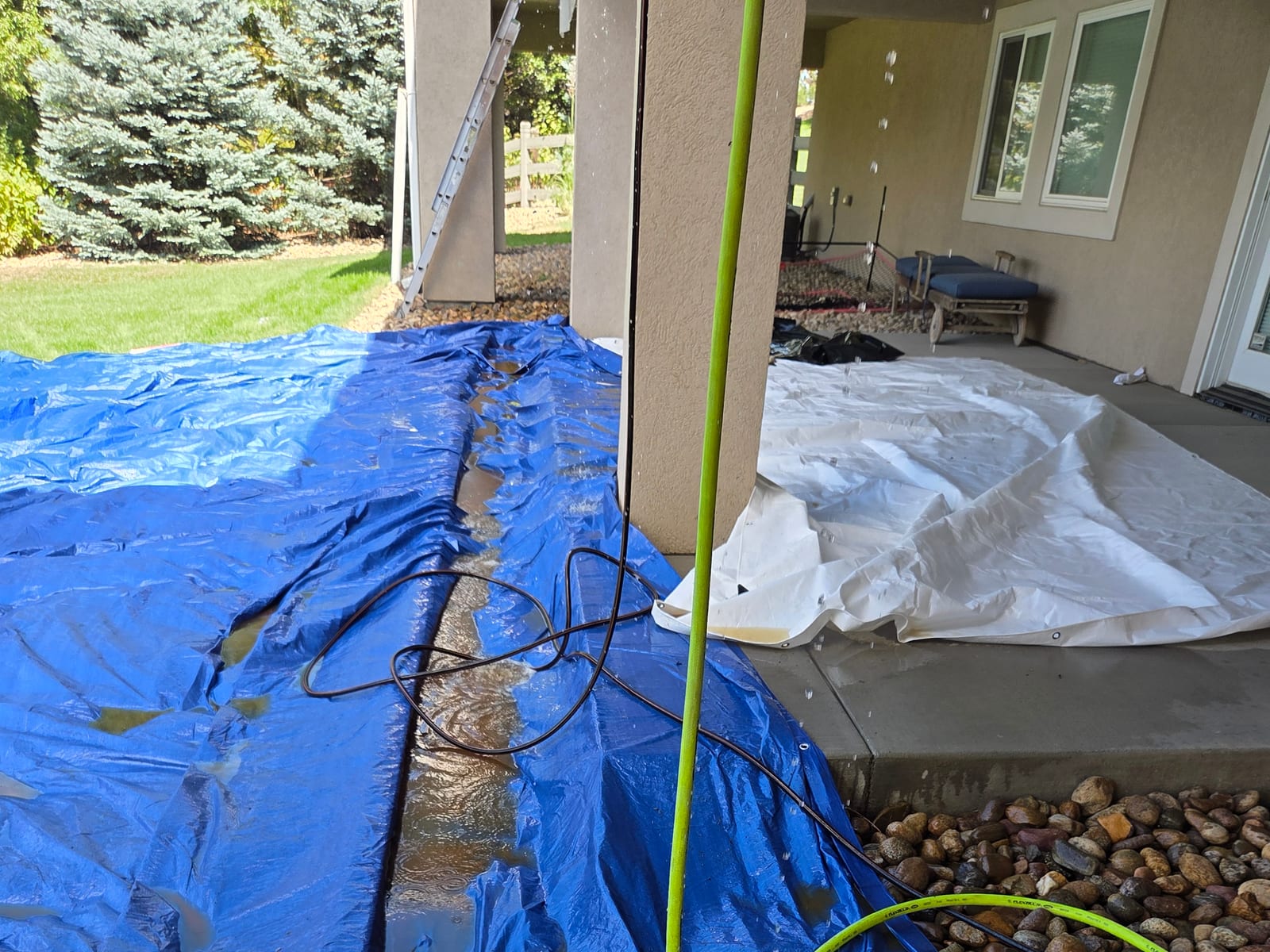
Getting back to bare, even wood took four steps:
- Stripped the entire deck back to bare wood with DRP Eco Wood Stripper
- Applied an oxalic acid wash to brighten and even out the wood tone
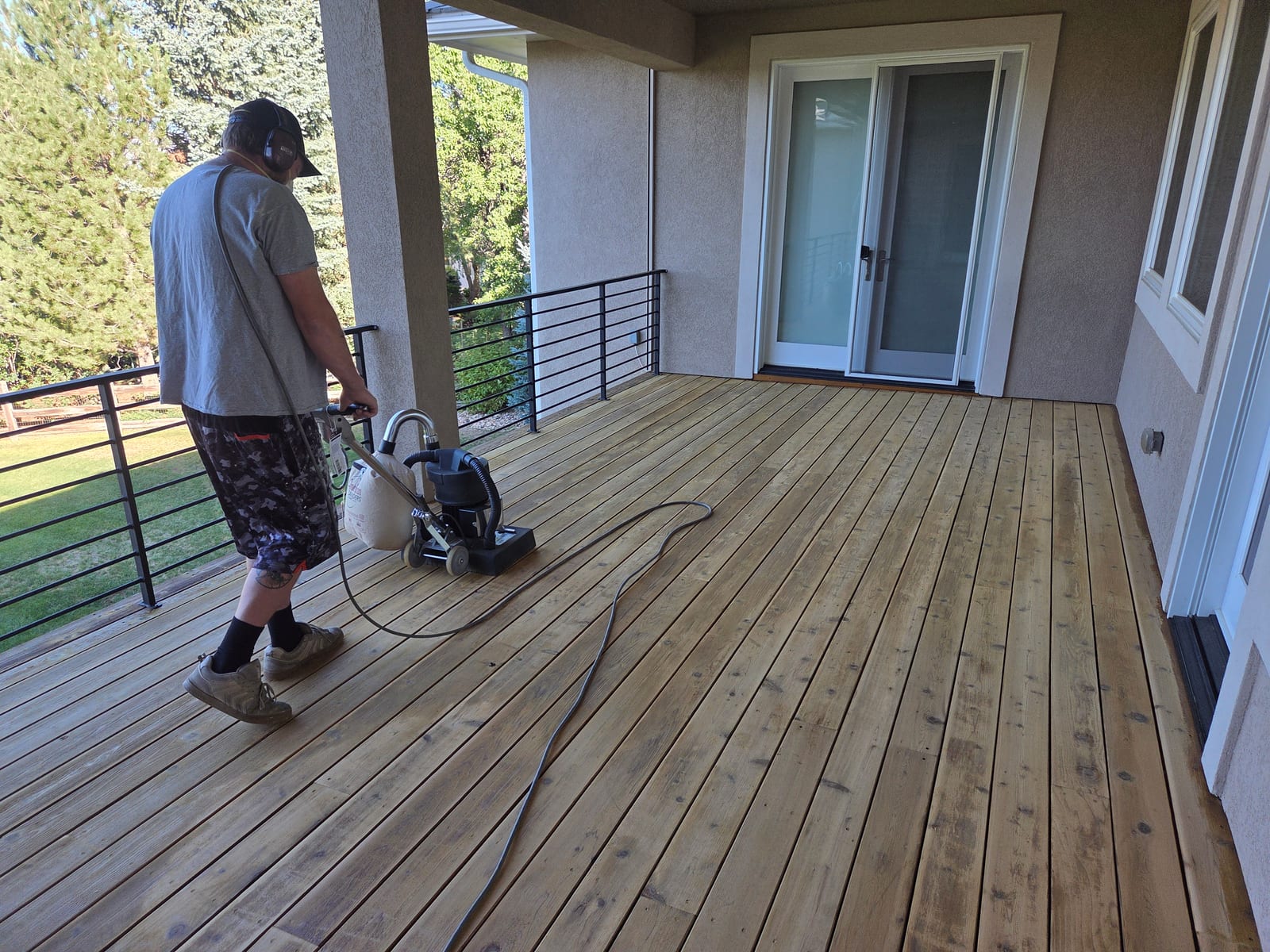
- Sanded 36–60–80 grit for a smooth, uniform surface, hand-sanding the tight spots the machine couldn't reach
- Confirmed moisture content was below 15% before staining
Checking Moisture Before We Stained
Wood above roughly 15% moisture content won't accept a penetrating stain properly — the stain can't displace water that's still sitting in the grain, so it stays closer to the surface and fails early. After stripping and washing, we let this deck dry and checked it with a moisture meter before applying anything. Skipping that step is how a freshly stripped deck ends up with the same peeling problem a year later, just with a different product on it.
The Result
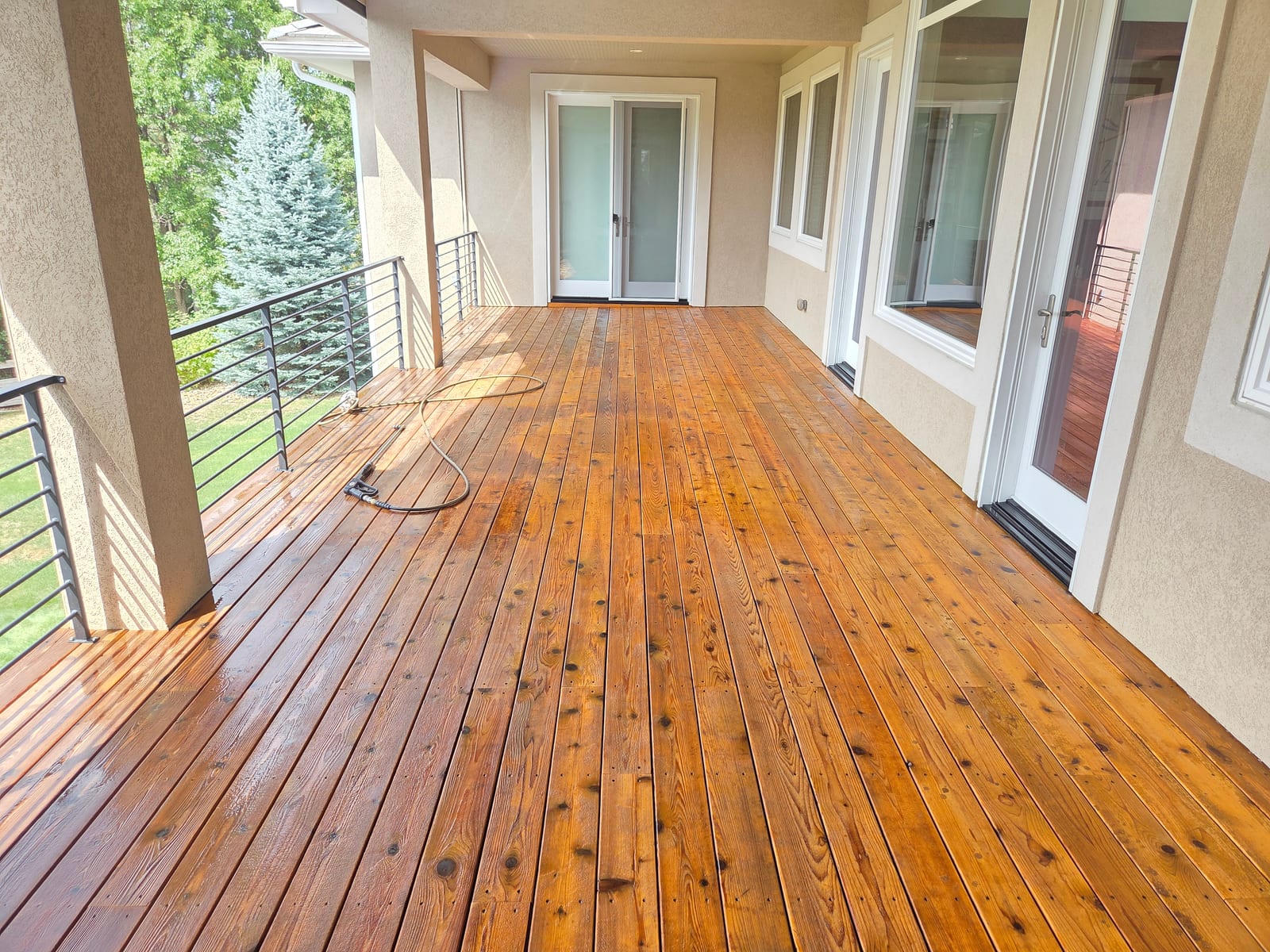
We finished with Expert Stain & Seal's Transparent Natural, the penetrating oil stain brand we use on most deck staining jobs, applied to open, bare wood. Once the old film coating was gone and the tone was even, the new stain absorbed the way it's supposed to — no lap marks, no patchiness, no sticky spots.
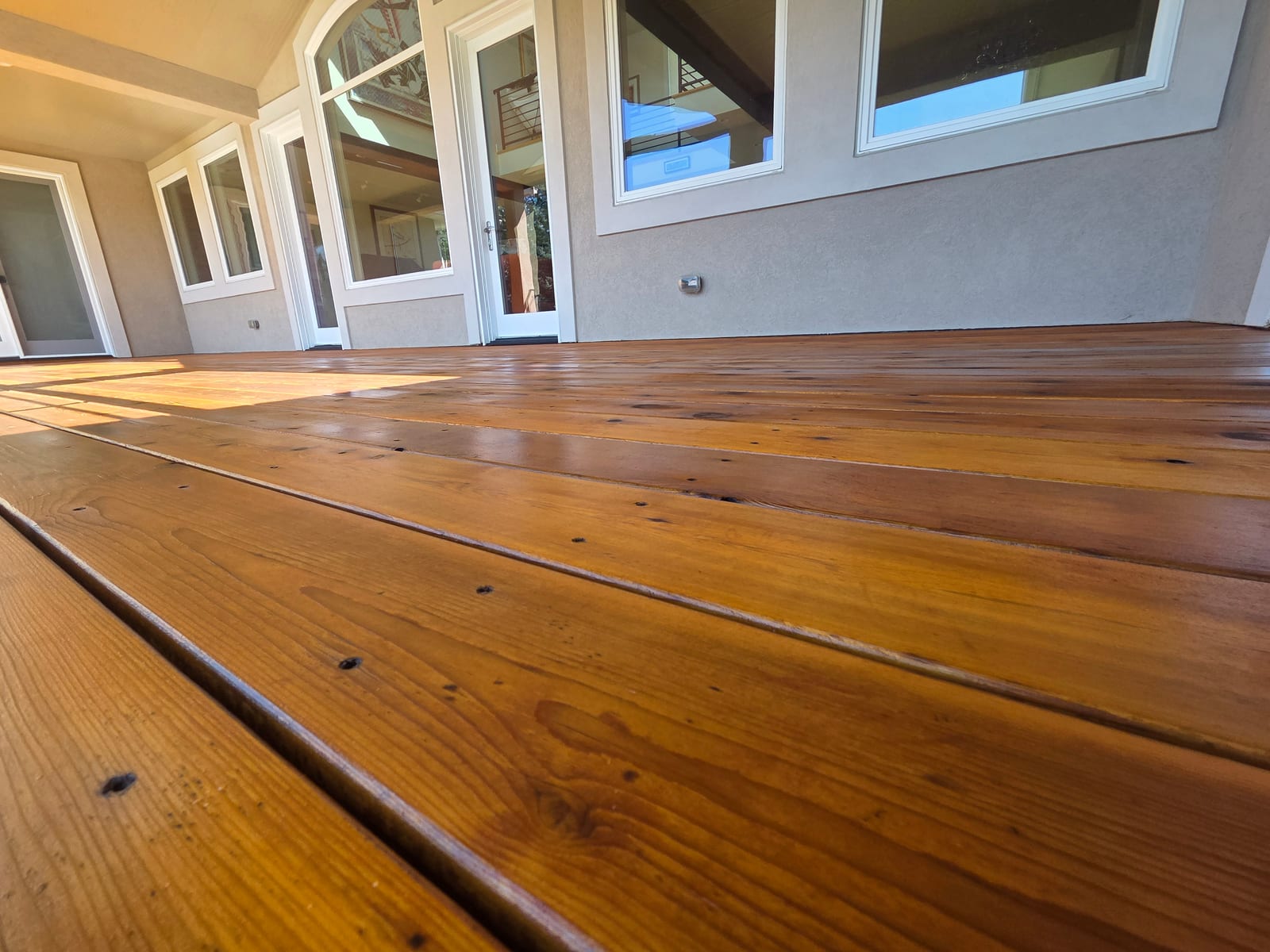
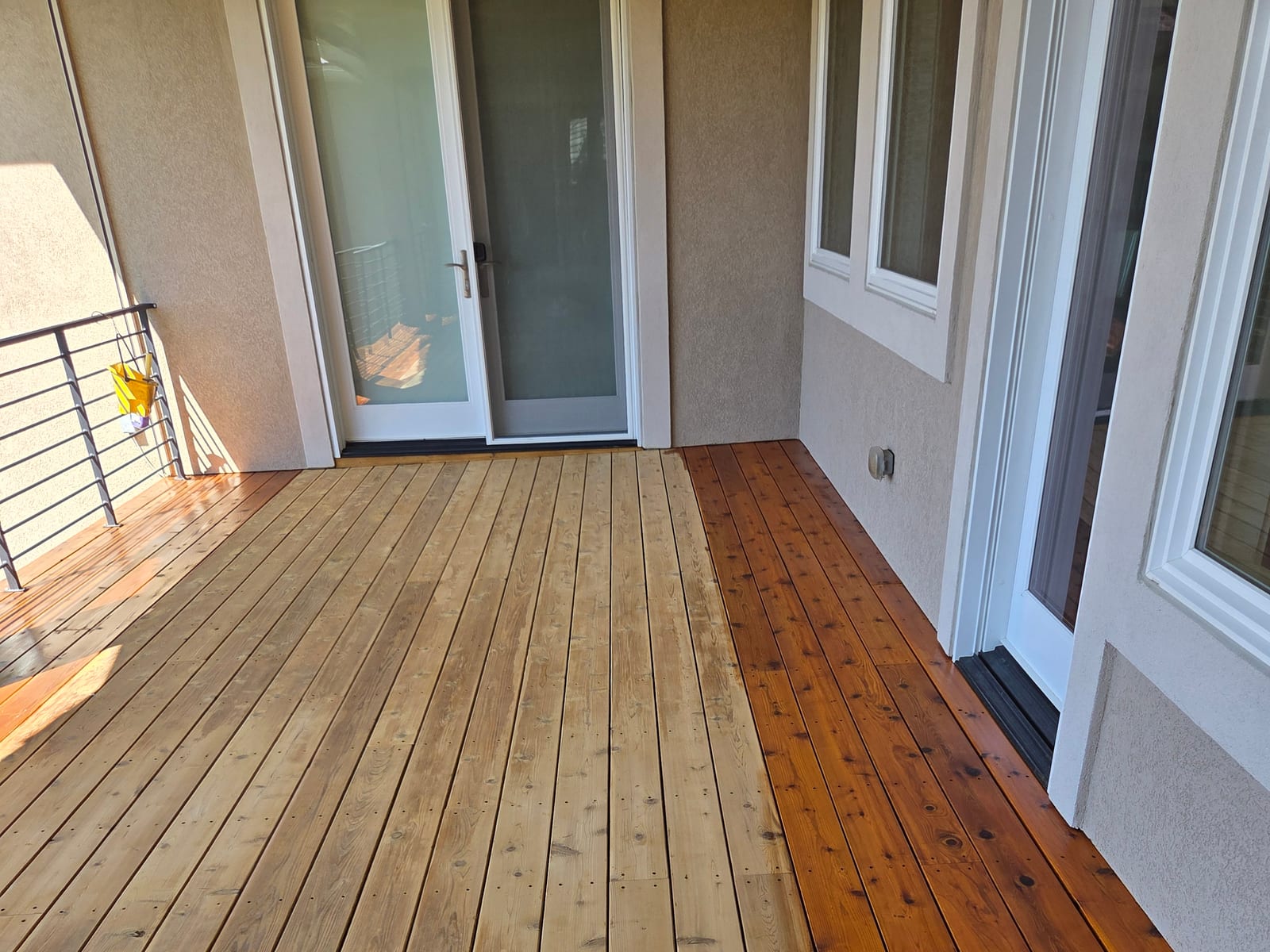
From strip day to the final coat, this job ran three working days. On a horizontal deck surface in Colorado, a properly prepped penetrating oil stain like this one holds up 2–4 years. When it's ready for its next coat, it'll be a wash and reapply — not another strip.
Not Every Stain Problem Means Replacing the Deck
We quoted a deck in Erie a while back that a homeowner had already been quoted $8,000 to replace — it was gray, rough, and a few boards had started to lift. We cleaned, brightened, and restained it instead, for a fraction of that number. Three years later they sent us photos. It still looks good. Most decks that look far gone are a prep problem, not a replacement problem — the deck in this case study included. It looked worse before we started than most decks we walk away from.
When This Isn't the Right Fix
A full strip isn't the answer for every stain problem. If the old finish is only failing in a couple of small, isolated spots, cleaning and spot-treating those areas costs less and gets you most of the way there — a full strip on a deck that's 90% fine is overkill. And if the boards themselves are soft, rotted, or structurally failing rather than just poorly finished, no amount of stripping and staining fixes that. That's a repair or replacement conversation, and we'll tell you so during the estimate rather than sell you a stain job on wood that won't hold it.
If your deck has a sticky, patchy, or uneven finish after a previous refinish attempt, get a free estimate and we'll tell you honestly whether it needs a full strip-and-restart or something smaller.