Film-forming stains look great when new. The problem shows up years later, when they peel and you're looking at a full strip before anything new can go on. Penetrating oils age differently — they fade rather than fail, which means lower prep costs every time you refresh the finish.
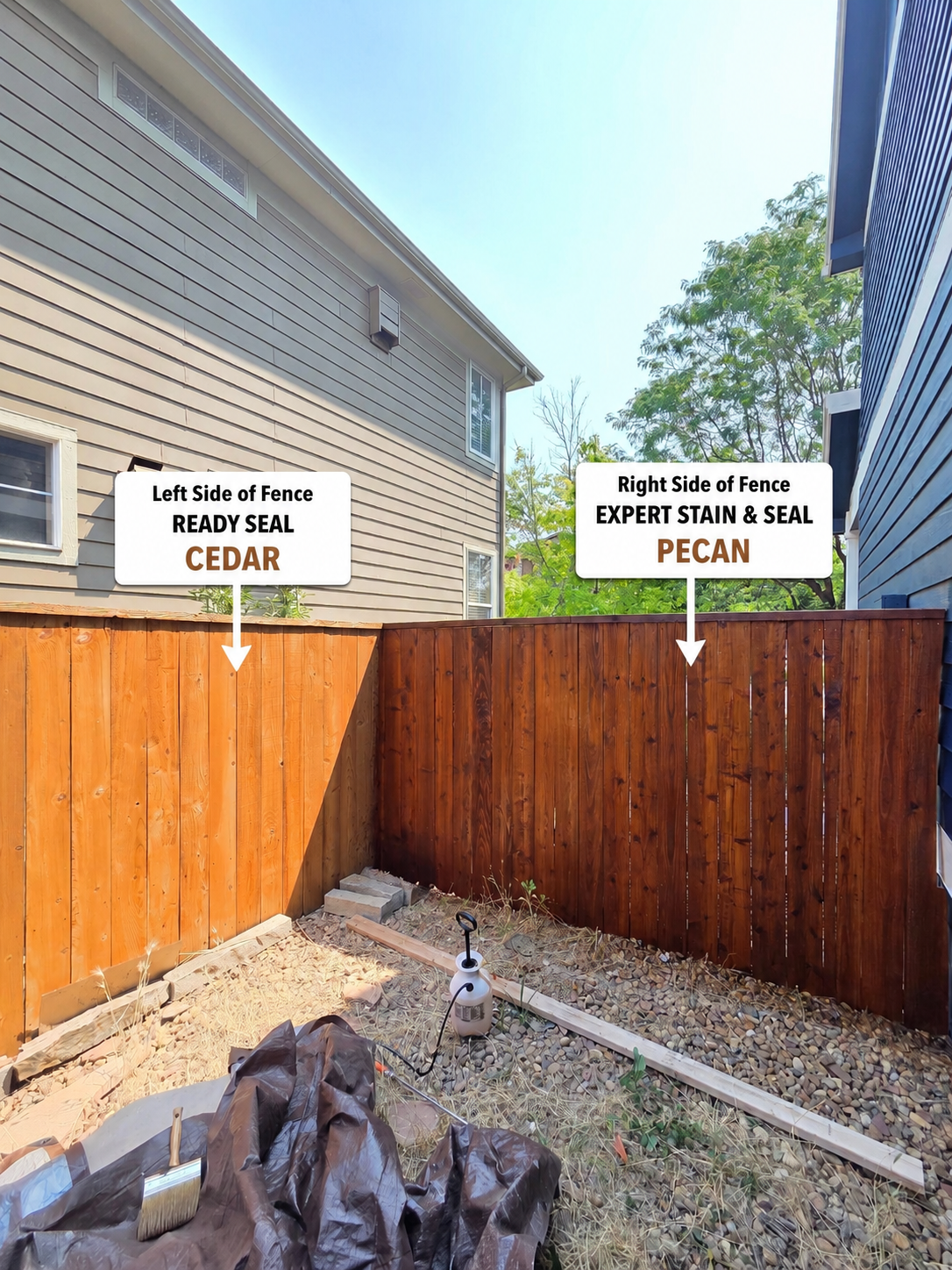
If you've gotten quotes from a few different companies for your fence or deck, you've probably heard different opinions on what type of stain to use. At Front Range Stain & Seal, we lean toward penetrating oil-based stains — like those from Expert Professional Woodcare and similar professional-grade lines — over film-forming products for most fences and decks in our climate. Here's why, and what that means for your project.
Penetrating Oil vs. Film-Forming: What's the Difference?
Film-forming stains and paints sit on top of the wood, creating a surface layer. Penetrating oil stains soak into the wood fibers themselves, nourishing and protecting from the inside rather than coating the outside.
Both approaches have their place, but for Colorado's climate — big temperature swings, intense UV, dry air, and freeze-thaw cycles — penetrating oils tend to hold up better over time and age more gracefully.
The Real Advantage: What Happens When It's Time to Redo It
The biggest difference shows up years down the road, when it's time to refresh the finish.
Film-forming coatings age by peeling, cracking, and flaking, because the surface layer eventually breaks its bond with the wood underneath. When that happens, the old coating has to be stripped or sanded off completely before a new coat can go on — otherwise the new product won't adhere properly, and you'll just be trapping the problem under a fresh layer. That kind of full strip-down is labor-intensive, which means it's expensive.
Penetrating oil stains age differently. Instead of peeling, they gradually wear and fade as the wood is exposed to sun and weather. That means maintenance coats can usually go directly over a properly cleaned surface — no stripping, no aggressive sanding, no coating removal. You're not paying for hours of scraping and stripping labor every time your fence needs attention.
Over the life of your fence or deck, that difference adds up. Lower prep costs on every future maintenance cycle is one of the main reasons we steer customers toward penetrating oils.
Prep Still Matters — Especially on Older Wood
None of this means you can skip prep. Even with a penetrating oil stain, older or neglected fences and decks need proper cleaning and brightening before a new coat goes on, or the stain won't absorb evenly and won't last as long as it should.
Our prep process on older wood typically includes:
- Washing to remove dirt, mildew, and surface grime that blocks stain absorption
- A cleaning treatment to lift out embedded gray, weathered wood fibers and open the grain back up
- A brightening step to neutralize the wood's pH after cleaning and restore a more natural color base, so the new stain color goes on true rather than muddy or blotchy
- Spot repairs — loose boards, popped nails, damaged sections — addressed before staining, not after
This is a meaningfully lighter process than stripping a failed film coating, but it's not something to skip. Wood that isn't properly cleaned and brightened won't hold penetrating stain well, no matter how good the product is.
Not the Right Choice for Every Situation
Penetrating oils aren't automatically right for every project. If a fence or deck already has a heavy film-forming coating on it, or if a customer specifically wants the thicker, more uniform painted look that film products provide, that's a different conversation — and we'll walk through the tradeoffs honestly rather than push one product on every job.
But for most cedar, pine, and other common fence and deck wood here in Boulder County and the Front Range, penetrating oil stains give you a better long-term outcome: easier future maintenance, a more natural wood look, and lower total cost over the life of the wood.