New wildfire codes in Boulder, Louisville, and unincorporated Boulder County require noncombustible fencing near homes. Here's what each jurisdiction actually requires, what the $500 rebate covers, and why replacing just the section of fence attached to your house is usually the right fix.
Ask why fences are suddenly part of the wildfire conversation in Boulder County, and the answer traces back to one afternoon in December 2021. During the Marshall Fire, wood fences carried flame directly into homes — acting as a fuse between a grass fire and a house that might otherwise have survived. Every jurisdiction below has since written fencing rules that treat a wood fence attached to your house the same way they'd treat a pile of firewood stacked against your siding.
I've sold fencing in Boulder County long enough to watch this shift happen from the inside — quoting jobs before the code changed, then re-quoting the same properties after. Here's what actually applies to you depending on where you live, and what it takes to comply without replacing a fence that doesn't need replacing.
City of Boulder: Noncombustible Within 8 Feet
Boulder adopted the 2024 International Wildland-Urban Interface Code, with local amendments, effective for permits issued after August 1, 2025. Inside the city's WUI area, any new fence or gate section within 8 feet of a structure must be built from noncombustible material. Sections of the same fence beyond 8 feet don't need to meet that standard — wood is fine the rest of the way.
The bigger change most homeowners haven't clocked yet: the WUI boundary itself grew, from roughly 4,600 properties to more than 16,000. A lot of homes that were never inside the mapped wildfire zone are inside it now, which means a fence project that wouldn't have triggered this rule two years ago does today. Check your address against the current boundary on Boulder's Wildland-Urban Interface Code page before assuming this doesn't apply to you.
One piece of relief: fences under 7 feet tall don't require a building permit in Boulder. That's a height threshold for paperwork, though — not a distance rule, and not an exemption from the material requirement itself. More on that mix-up below.
City of Louisville: Noncombustible Within 5 Feet
Louisville's home-hardening ordinance applies to any building permit received on or after December 10, 2024 — including Marshall Fire rebuilds permitted after that date. It requires noncombustible siding, decks, and fences within 5 feet of a home, a tighter distance than Boulder's 8-foot rule.
Unincorporated Boulder County: The Same 5-Foot Rule
If you're outside city limits — much of the county land around Boulder, Louisville, and Longmont — Boulder County's wildfire mitigation code applies instead. It requires noncombustible fencing within 5 feet of a structure, and noncombustible retaining walls within 8 feet.
Three jurisdictions, three distances, one underlying idea: get flammable material away from the building.
- City of Boulder — 8 ft from structure, for permits issued after Aug 1, 2025
- City of Louisville — 5 ft from structure, for permits received on or after Dec 10, 2024
- Unincorporated Boulder County — 5 ft from structure (8 ft for retaining walls)
5 Feet, 7 Feet, 8 Feet — What Each Number Actually Means
The most common mix-up we run into on-site: homeowners citing "7 feet" as a distance rule. It isn't. Seven feet is Boulder's height threshold for needing a building permit on a fence at all — a fence under 7 feet tall doesn't need one. It has nothing to do with how close noncombustible material has to be to your house.
The actual distance rules are 5 feet in Louisville and unincorporated Boulder County, and 8 feet inside the City of Boulder's WUI area. Mixing up permit height with fire distance is an easy mistake, and it's the one most likely to get a homeowner building the wrong thing.
The $500 Wildfire Partners Rebate — 2026 Deadlines
Boulder County's Wildfire Partners program offers a rebate of up to $500 per household toward wildfire mitigation work. Fencing falls under their "Fences Are Fuses" category, which covers replacing the first 5 feet of fencing attached to a home with noncombustible material — which lines up closely with the retrofit most homeowners need anyway.
For 2026, the deadlines are firm: apply by October 8, and complete the work by October 29. One rebate per household or property. Details and the application are on wildfirepartners.org/rebate.
What's Coming Statewide
This isn't just a Boulder County trend. The Colorado Wildfire Resiliency Code Board is expected to require noncombustible materials within 8 feet of new construction in moderate-to-high fire hazard areas statewide, starting around July 2026. That's not settled law yet, and the scope could still change before it's finalized — but the direction is clear enough that we're not treating the local codes as a temporary inconvenience.
The Retrofit: Harden the First Feet, Stain the Rest
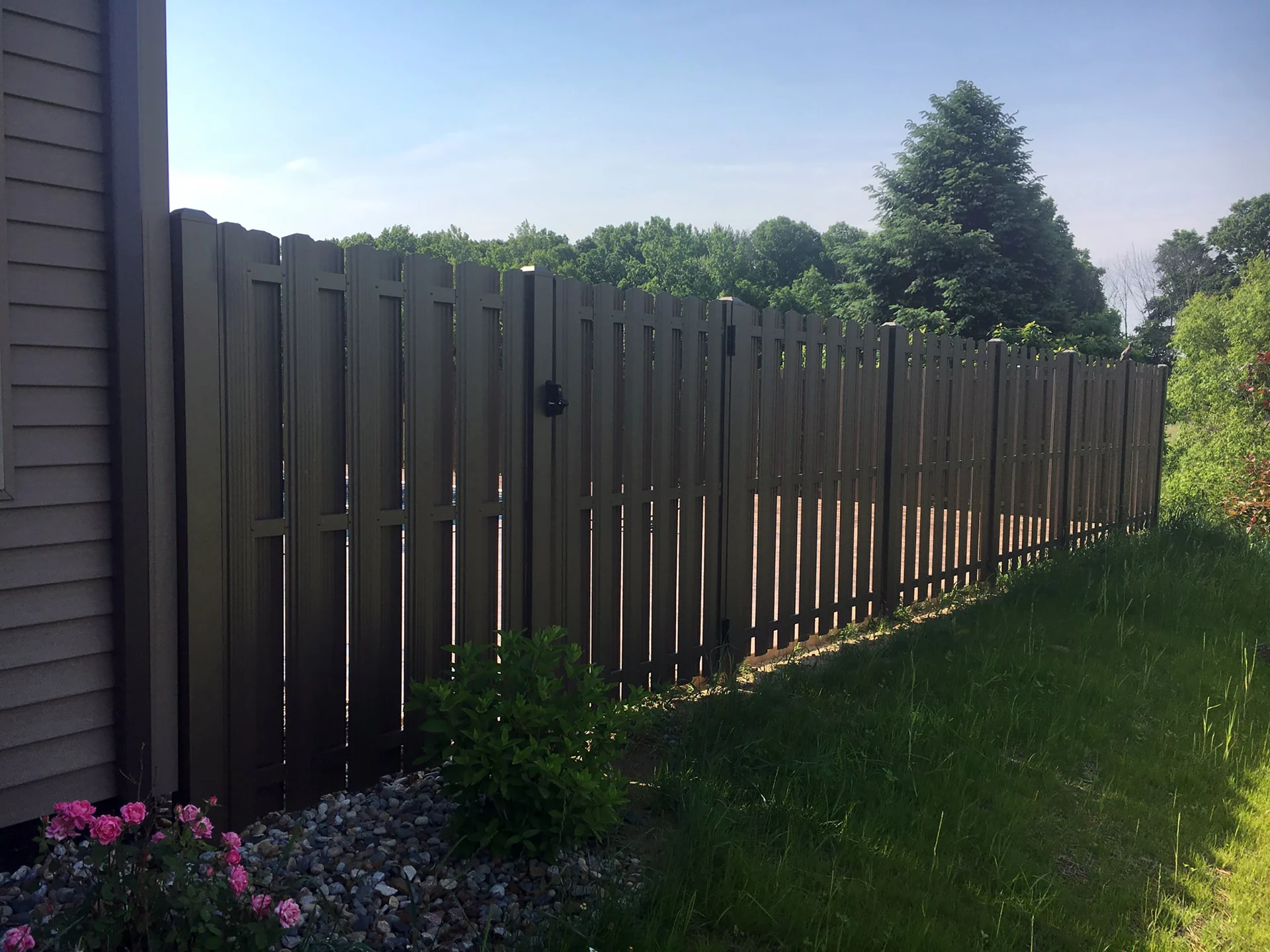
You don't need to replace an entire wood fence to comply with any of these codes. What the code actually asks for is that the section closest to your house — 5 or 8 feet, depending on jurisdiction — be noncombustible. Everything beyond that distance can stay wood.
In practice, that means pulling the section of fence attached to or nearest your home and replacing it with steel — Fortress or Ameristar ornamental panels, or a Colorbond-style steel system, depending on the look you want — then cleaning, brightening, and staining the remaining wood fence so the whole run reads as one fence, not two mismatched materials bolted together.
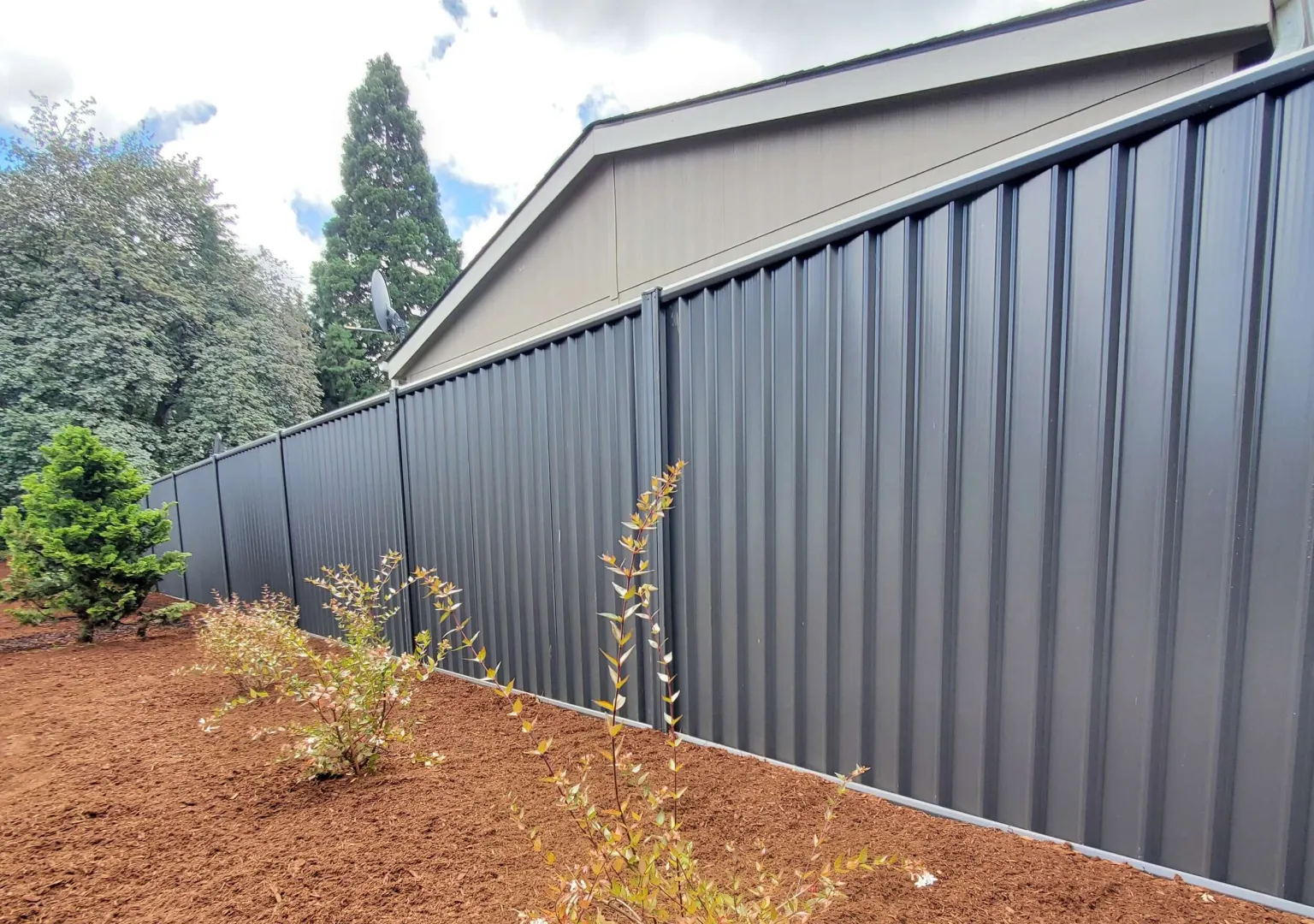
That's the retrofit we get called out for most now: harden the first feet, keep the rest of the fence you already have and like, and get it all matching. It's faster and less expensive than tearing out a full run of fence that was never the problem to begin with — the code isn't objecting to your fence, it's objecting to eight feet of it.
When This Retrofit Isn't the Right Fix
If your entire fence run already sits inside the trigger distance from your house — a small side yard where the whole thing is within 5 or 8 feet — a partial retrofit doesn't save you much, and pricing a full noncombustible fence is the more honest answer. And if you're pulling a permit for new construction rather than retrofitting an existing fence, check with your building department on which rule category your project falls under before you call us — new-construction and existing-fence rules aren't always triggered the same way.
Codes change, and amendments get adopted faster than any blog post can track. Verify current requirements with your local building department — City of Boulder, City of Louisville, or Boulder County, depending on where you are — before starting work.
If you want an honest read on which distance rule applies to your property and what a harden-the-first-feet retrofit would look like, get a free estimate and we'll walk the fence line with you.