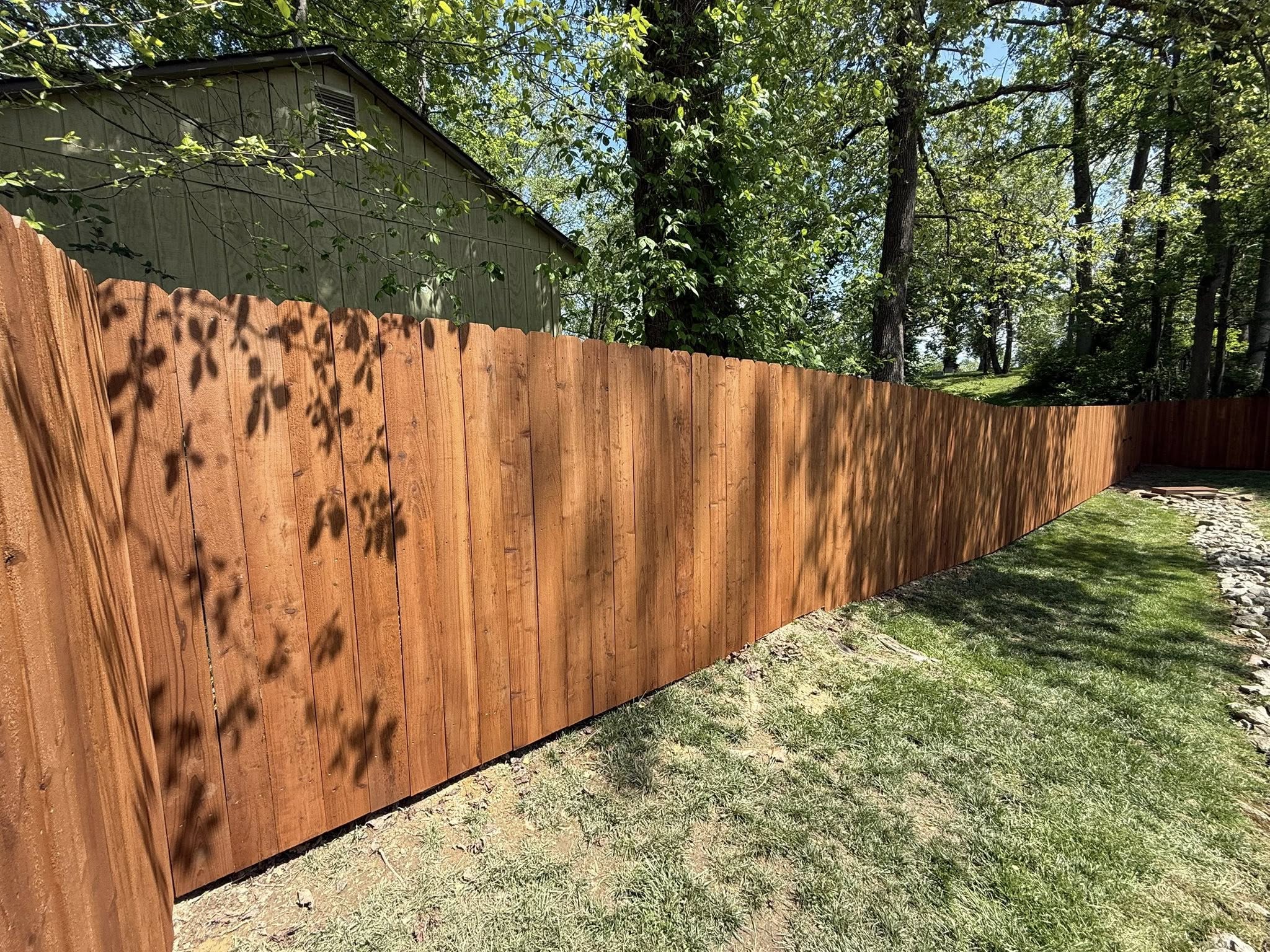
Wait at least two weeks after a new fence is installed — then check moisture content with a meter, not a calendar. Below 15% is the threshold. In Colorado's dry climate, cedar fences often get there in three to four weeks. Pressure-treated wood takes longer.
Wait at least two weeks after a new fence is installed before staining it — and even then, the go/no-go decision comes from a moisture meter, not the date on the work order. New lumber carries mill moisture, and in some cases the treatment process adds more. Staining above 15% moisture traps water beneath the finish and causes peeling within a season.
Why timing matters more than the calendar
The issue isn't age — it's moisture content. A fence installed in shade during a humid stretch of weather can sit at 19% moisture for six weeks. The same species installed in July sun in Boulder may be at 12% in two and a half. Picking a day on the calendar and staining regardless is the fastest way to waste a stain job.
Colorado's low humidity and intense UV exposure at altitude help new wood dry faster than in humid climates — that's an advantage. But it still needs time, and there's no shortcut around testing.
How we check: the moisture meter
A pin-type moisture meter reads moisture content inside the wood, not just at the surface. We take multiple readings across different boards and different sections of the fence — posts, rails, and pickets can all read differently depending on how they were stored before install. We look for a consistent reading below 15% before scheduling the stain.
The water drop test is a secondary check. A drop of water on the board surface should absorb within 30 seconds. If it beads up and sits there, the surface isn't open enough for stain to penetrate regardless of what the calendar says.
What 15% moisture content means
Wood absorbs and releases moisture continuously based on humidity and temperature. Below 15%, the wood has reached a point where stain can penetrate the grain and bond properly. Above that, there's enough internal moisture to prevent full absorption, and the stain stays near the surface. When the wood finishes drying and shrinks slightly, the shallow-bonded stain cracks and peels.
Fence boards sit vertically and shed water rather than pooling it — so they dry faster than horizontal deck boards. But the same threshold applies. We don't skip the test because the fence looks dry on the outside.
How long it takes in Colorado
Cedar installed in late spring or summer in the Front Range often reaches 15% in three to four weeks. Pressure-treated wood takes longer — the treatment process forces moisture into the wood cells, and releasing that takes more time. We generally see PT fences needing six to twelve weeks before they're ready.
- Cedar fence installed in late spring or summer: typically 3–5 weeks to reach 15%
- Cedar fence installed in fall: 6–8 weeks or more depending on conditions and shade
- Pressure-treated fence: allow 6–12 weeks minimum before the first moisture check
A real example from Longmont
A homeowner in Longmont had a new cedar fence installed in May and wanted it stained immediately. We tested moisture content — 22%, which was too high. We recommended waiting six weeks. They did. The stain penetrated evenly, and two years later the fence still holds colour without any peeling.
The homeowner who stains a week after install, without checking, often calls back the following spring with patchy, lifting boards. That job needs stripping before it can be redone — adding cost that waiting four weeks would have avoided entirely.
When not to hire us
If a fence contractor told you the fence was ready to stain that same week, we'd rather verify with a meter than take their word for it. We won't put product on wood above 15% moisture. If the fence isn't ready, we'll give you a return window and come back when it is. Rushing this step is how stain jobs fail in their first year.